
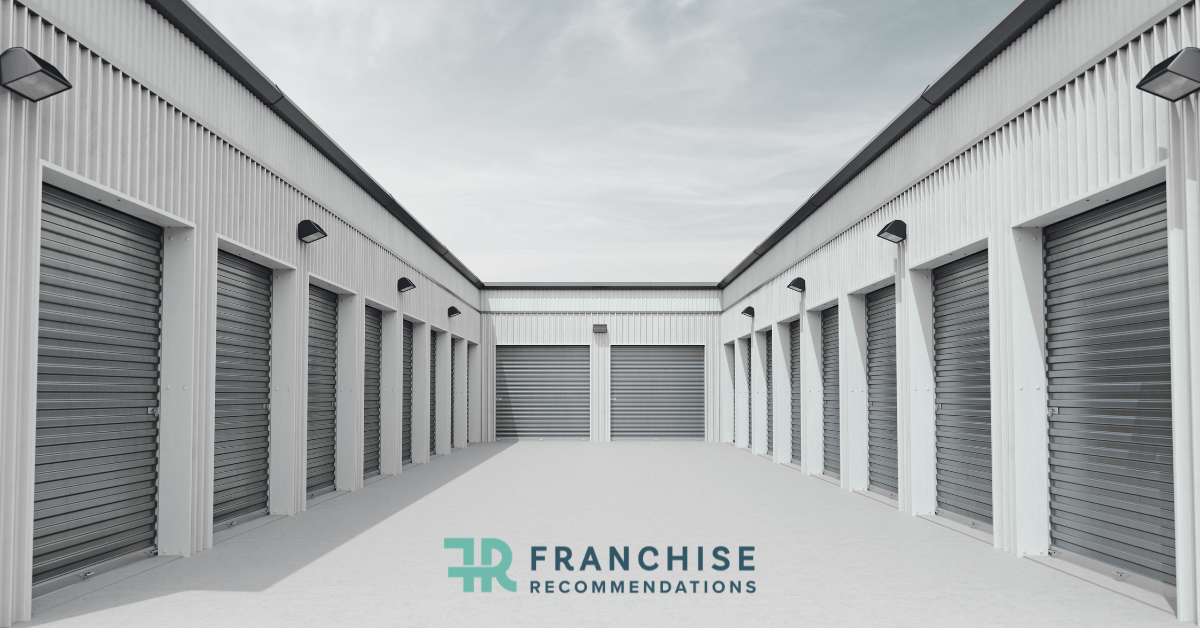
Over the years, I’ve had many people ask me about self-storage businesses when they begin exploring franchise ownership or business investment opportunities.
On the surface, self-storage appears to offer a lot of things people say they want in a business.
Compared to restaurants or heavily staffed retail operations, it feels simpler.
People are attracted to the idea of fewer employees, recurring monthly revenue, less day-to-day chaos, and a business that eventually becomes more operationally streamlined over time.
There is also a perception that once the facility is built and stabilized, the business can become relatively passive compared to many traditional owner-operated businesses.
These are just some of the legitimate reasons people are attracted to the category.
And I love when people bring them up because it creates a really helpful discussion about the difference between an emotional business search and an intentional one.
Emotional vs. Intentional
Many people begin their search emotionally attached to a specific category because they associate it with a certain lifestyle or operating structure.
But the deeper and more productive conversation usually begins when we stop focusing only on the category itself and start identifying the specific business characteristics that are actually appealing to them.
An emotional search often starts with:
“I want that business.”
An intentional search digs deeper and asks:
“What is it about that business that actually appeals to me?”
That distinction is important.
Because once many prospective owners begin digging deeper into what it actually takes to open and operate a self-storage business, the conversation often changes.
What People Underestimate
The reality is that self-storage ownership often requires a level of capital, development expertise, and risk tolerance that many first-time business owners don’t have.
In many cases, you are not simply buying a business.
You are taking on a real estate development project.
That can involve:
- Land acquisition
- Zoning and permitting
- Construction oversight
- Financing complexity
- Contractor coordination
- Long timelines before opening
- Delayed cash flow while occupancy ramps up
And while the business may eventually become operationally streamlined, the path to getting there can be long, expensive, and stressful.
The “passive income” portion often comes much later than people initially imagine.
For some investors, that challenge is exciting and fits perfectly with their background and financial position.
But many people eventually realize they are far more interested in the operating style associated with self-storage than they are in personally taking on a major real estate development project.
In other words, they often want:
- Lower labor models
- Streamlined operations
- Recurring revenue
- Systems and automation
- Reduced management complexity
- Smaller staffing structures
- A business that feels more predictable and scalable over time
But they would prefer to achieve those characteristics with a more reasonable investment level and a faster, simpler path to opening the business.
That realization is often where the search becomes far more intentional.
Once someone understands the characteristics they are actually looking for, they often discover there are completely different industries and business models capable of delivering many of the same operational advantages they initially associated only with self-storage.
Other Businesses With Similar Characteristics
Once people identify what they actually like about self-storage, other categories often begin to make more sense.
There are businesses today that emphasize technology-enabled operations, self-service customer experiences, lean staffing models, recurring revenue, and simplified day-to-day management without requiring the same level of real estate development complexity.
Some of these businesses are retail storefront concepts built around remote access and self-service technology. Others are service businesses with streamlined operational structures and strong systemization.
For example, newer indoor golf and fitness-style concepts combine technology, memberships, remote access, and simplified operations in ways many people find appealing, without requiring large-scale real estate development projects.
Salon suite concepts are another example of businesses that often attract people looking for operational simplicity and smaller staffing structures.
There are also service-based concepts tied to insurance, logistics, restoration, and emergency response that can offer surprisingly systematic and scalable. Think operating models without requiring someone to personally develop a large commercial property from the ground up.
In many cases, these businesses appeal to people for some of the very same reasons that self-storage initially caught their attention.
The point is not that self-storage is a bad business model. For the right investor, it can be an excellent fit.
But many people initially become emotionally attached to a specific business category before fully understanding why it appeals to them in the first place.
The Better Question to Ask
Instead of asking:
“What business sounds easiest?”
A better question is:
“What type of business structure actually fits my goals, risk tolerance, lifestyle preferences, timeline, and investment comfort level?”
Because sometimes the thing attracting someone to self-storage is not the storage business itself.
It’s the operating style they believe comes with it.
And once that becomes clear, the search often becomes far more productive and the landscape of opportunities much broader than they originally realized.
If you’re interested in exploring franchise opportunities with specific characteristics, let’s connect.